
I have received a response to my complaint about Susan Watts’ Newsnight report on President Obama’s inaugural speech. This is what the BBC Trust say:

Thank you for your email of 22 January to the BBC Trust regarding aNewsnight report by Susan Watts. I am responding on the Trust’s behalf; I work in the Trust Unit which provides advice and support to the BBC Trust.

I have noted your comments for the information of the Trust. I should explain however that the role of the BBC Trust as set out in the BBC’s Royal Charter is distinct from that of the BBC’s management and it has no role in day to day editorial matters. The Trust’s role is to set the overall framework, the BBC’s Editorial Guidelines, which set out the values and standards that all BBC output should meet. Responsibility for the BBC’s editorial content within these Editorial Guidelines rests ultimately with the Director-General, as Editor-in-Chief.

There is a BBC complaints process in place to deal with instances where audiences feel that there has been a breach of these Guidelines. This requires that complaints must be dealt with in the first instance by the BBC’s management; the Trust’s role in this process is to consider appeals from complainants should they be dissatisfied with the response that they have received from the BBC’s management. Full details of the\complaints process can be found at  http://www.bbc.co.uk/complaints/

As the Trust cannot involve itself in your complaint at this stage, I am forwarding your email to BBC Information for an initial response on behalf of BBC management.

I hope this is helpful.

Yours sincerely

It has taken over a week to reach this momentous decision. The complaint that I sent to the BBC Trust can be found here.

In spite of what the BBC Trust say, the agreement that they entered into with the government in July 2006 leaves no doubt that it is they who have final responsibility for accuracy and impartiality in news and current affairs output, not the Director-General.

I hope to receive a proper response to my complaint before too long.
Rhonda Roland Shearer and Danielle Elliot of stinkyjournalism.org have greatly expanded their coverage of what someone has referred to as  ‘splicegate’.

As well as a very well informed and thoughtful exploration of the ethical issues involved in the editing of quotes, they have been in touch with the BBC’s Press Office.  The statement that they received seems to explain everything to the BBC’s entire satisfaction, but I doubt whether many people who have watched the video will be convinced.

This was one part of a 50 min programme exploring the start of the Obama presidency from various angles. We edited sections of the speech to reflect the elements in it that referred to Science as a way to give people an impression or montage of what Obama said about science in his inauguration speech. This was signposted to audiences with fades between each point. It in no way altered the meaning or misrepresented what the President was saying. The piece then went on to explore the challenges facing the president in this area.

They have also heard from Peter Rippon, the editor of Newsnight, and there is much more. Over on the other side of the Atlantic journalistic ethics seem to be taken pretty seriously. The Stinky Journalism team asked four experts on the subject, one of them an ex-BBC employee, to give their opinions on whether Newsnight’s conduct was acceptable. Their responses are interesting, to say the least.

I strongly recommend that anyone who wants to understand the issues that are at stake to have a good look at Rhonda and Danielle’s post.

Bishop Hill has also filed some typically shrewd observations under the title Ethicists criticise BBC .

If the BBC wants to justify the editing of the Obama quote, then they will have to come up with far more convincing explanations than the ones that have appeared so far. The sooner that the BBC Trustees provide an official response to my complaint the better for all concerned, I think.

The BBC press release that announced the appointment of Peter Rippon  last autumn had this to say:

BBC’s Deputy Director of News, Stephen Mitchell, said: “Peter Rippon is an outstanding editor with significant experience and a reputation for innovation with his current stable of programmes from The World At One, PM and Broadcasting House.

“Newsnight is one of our most important programmes and I am convinced that under Peter’s leadership its reputation will be taken to new heights.”

Press release

Newsnight is, in my opinion, an excellent programme, but that does not mean that it is infallible.  The present furore on the internet could easily be abated by a correction and an apology. Trying to defend the indefensible will only prolong the agony and do further harm to the BBC’s reputation.


BBC Newsnight’s editor, Peter Rippon, has posted a comment on Susan Watts’ blog attempting to explain the very strange ‘sound bite’ used in their report on President Obama’s inaugural speech which was discussed here.

33. At 4:44pm on 24 Jan 2009, PeterRipponEd wrote:
Hello All,

Re the opening of Susan’s piece. We did edit sections of the speech to reflect the elements in it that referred to Science. The aim was to give people an impression or montage of what Obama said about science in his inauguration speech. This was signposted to audiences with fades between each point. It in no way altered the meaning or misrepresented what the
President was saying. You can look for yourself above.

Apologies for not responding sooner. I thought I had. BBC Editors find this blogging software frustrating at times too.

Peter Rippon
Editor, Newsnight

Comment #33, here

If the reaction in the dozen or more comments that have already been posted in response are anything to go by, then he has failed to convince his readers.

I do not think that any viewer outside the Newsnight editing suite would recognise that the ‘sound bite’ was a montage, or that the extracts from the speech were separated by fades. And he also needs to explain why the extracts were arranged in a different order from the one in which they appear in the speech if this was intended as a montage.

Then there is the matter of Susan Watts opening remarks:

President Obama couldn’t have been clearer today. And for most scientists his vote of confidence would not have come a moment too soon.

In the eight years of the Bush presidency, the world saw Arctic ice caps shrink to a record summer low, the relentless rise of greenhouse gas emissions, and warnings from scientists shift from urgent to panicky.

How can this be explained if viewers were not intended to understand the ‘sound bite’ as two complete and consecutive sentences? Her opening remarks only make sense if the ‘sound bite’ is perceived in this way.

I sent a formal and detailed complaint to the BBC Trustees on Thursday, specifically asking for confirmation of receipt. So far I have heard nothing, but perhaps the trustees’ office have the same kind of trouble with electronic mail that Newsnight editors have with blogging software.

The BBC Trustees are responsible for ensuring that the corporation’s news and current affairs reporting is accurate and impartial, as their charter requires. This is a matter that must be dealt with by them. It is far too important to be settled by a cheery comment from Peter Rippon on a blog.

Natalie Solent has an excellent post about this at Biased BBC.

Climate-Resistance also has a very thoughtful post which covers other aspects to Susan Watts’ report too.

What should the BBC do if the new US President’s references to global warming in his inaugural speech don’t quite come up to expectations?

Last night I was reading through the full text of Barack Obama’s speech just before the BBC’s daily current affairs magazine, Newsnight, came on television. So his words were fresh in my mind when Susan Watts, Newsnight’s science editor, presented a piece on the implications of the speech for science in general and global warming in particular. I was surprised when it started with this sound bite from the inaugural speech:

We will restore science to its rightful place, [and] roll back the spectre of a warming planet. We will harness the sun and the winds and the soil to fuel our cars and run our factories.

Link to sound file

I didn’t seem to remember him saying that at all.

When the program was over, I went back to the text and this is what I found.

It would seem that someone at the BBC had taken the trouble to splice the tape so that half a sentence from paragraph 16 of the inauguration speech was joined on to half a sentence from paragraph 22, and this apparently continuous sound bite was completed by returning to paragraph 16 again to lift another complete sentence.

Susan Watts then started her report by saying: Continue reading »

A couple of days ago, I wrote to Richard D North asking if he could remember whether the BBC climate change seminar which he attended in 2006 was held under the Chatham House Rule. This is rather an important point.Chatham House, also known as the Royal Institute of International Affairs, originated in the aftermath of the First World War and has become a respected source of independent analysis, informed debate and influential ideas on how to build a prosperous and secure world.

The House has given its name to the famous Chatham House Rule, first established here in 1927 and revised twice since. The Rule is used around the world to ensure free and open debate.

http://www.chathamhouse.org.uk/about/history/

This is what the rule says:

“When a meeting, or part thereof, is held under the Chatham House Rule, participants are free to use the information received, but neither the identity nor the affiliation of the speaker(s), nor that of any other participant, may be revealed”.

The world-famous Chatham House Rule may be invoked at meetings to encourage openness and the sharing of information.

EXPLANATION of the Rule

The Chatham House Rule originated at Chatham House with the aim of providing anonymity to speakers and to encourage openness and the sharing of information. It is now used throughout the world as an aid to free discussion.

Q. What are the benefits of using the Rule?
A. It allows people to speak as individuals, and to express views that may not be those of their organizations, and therefore it encourages free discussion. People usually feel more relaxed if they don’t have to worry about their reputation or the implications if they are publicly quoted.

http://www.chathamhouse.org.uk/about/chathamhouserule/

The value of the Chatham House Rule in sensitive diplomatic negotiations or conflict resolution is obvious. Parties can, if the rule is in operation, freely express views and explore ideas without having to worry that what they say may be held against them in the future, but this is clearly an intermediate stage in the process of negotiation or decision making.  It is a means of clearing the ground so that substantive discussions and decision making can take place, or of exploring sensitive issues in a way that might be difficult if everything that is said has to be on the record. It is certainly not intended to be a means of hiding a decision making process behind closed doors. In my view, and I suspect in the view of Chatham House too, using the rule for this purpose would be inappropriate.

Here is Richard D North’s reply to my enquiry:

Continue reading »

Jan 082009

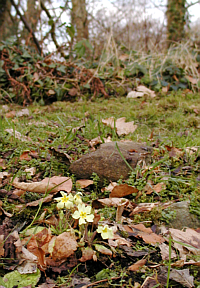
Last April I had some All Fools Day fun with a photograph of a very exotic butterfly sitting on a bunch of primroses in our garden. This was in response to a front-page story in the Independent headed ‘How the blurring of the seasons is a harbinger of climate calamity’.  The article claimed that the somewhat archaic science of  phenology is a reliable method of detecting dramatic changes in the climate.In Victorian times it became fashionable to keep a natural history diary in which observations of any curiosities noticed on country walks or around the garden were noted. Of course first flowering dates were recorded together with other information about plants, birds and of course the weather. As such records proliferated they were collated and analysed. From this material the science of phenology developed: the study of recurring natural phenomena such as the onset of each season of the year.

During the twentieth century interest in phenology waned although the Royal Meteorological Society collected data until 1948. The reason for this fall from favour has been explained by Philip Eden, a vice-president of the RMS:

Plants and animals are, of course, affected by the weather, but they are affected by other things too. Information collected about flowering dates, hibernation times, the arrival and departure of snow and ice, are all called ‘secondary data’ or ‘proxy data’ by climate experts.
All these secondary indicators are affected by other factors such as human intervention, genetic modification, pesticides, fertilisers, pollution, and complex interactions with other elements of a changing ecology. Some of them respond to climate change with a delay of years or even decades.
Philip Eden, A Change in the Weather, p 188-9

But with the advent of concern about global warming, phenology has been revived. Over the last few years an ecologist called Dr Tim Sparks has been responsible for numerous stories in the media about early flowering dates, mushrooms that appear when least expected, and even the extension of the grass cutting season. Most recently he forecast that the UK would have its first ‘green Christmas’ this year, with leaves still on the trees. His research has, of course, been presented as incontrovertible evidence of man-made global warming, in spite of what the Royal Meteorological Society might think, and news media like The Independent and the BBC have been very happy to report his findings in these terms.

  winterprimrose.png

Continue reading »

© 2011 Harmless Sky Suffusion theme by Sayontan Sinha