Goodbye to 2009

Posted by TonyN on 31/12/2009 at 9:04 pm The Climate 25 Responses »
Dec 312009

A year ago I signed off my 2008 New Year post with the words:

Much has changed during the last year, and I have no intention of joining the current fashion for prediction by trying to anticipate what will happen next, other than to suggest that next year will probably yield surprises, in the same way that last year did.

Goodbye to 2008

Overall, I suppose I was right about there being surprises in store it was a pretty safe bet but there is no similarity between the occurrences of the last couple of months of 2009 and anything that has preceded them in the course of the climate debate.

Most of what I wrote on that occasion had to do with the controversy about a decade long standstill, or even decline, in global temperatures. During the last twelve months, that has ceased to be controversial except for a few diehards who resolutely try to keep the myth of a steadily warming planet alive.

Any admission that global warming has stopped whether temporarily or permanently, no one knows was of course unthinkable in the run-up to the Copenhagen conference. In the aftermath of its failure anything would seem to be possible. Already there are voices suggesting that the IPCC has run its course and that responsibility for coordinating international policy on climate change should be taken away from the UN.

The extent to which Climategate played a part in the Copenhagen debacle is still not clear. There were certainly many commentators and politicians who were eager to downplay any influence that it may have had, but the term ‘Climategate’ is now firmly embedded in the language, and it is now a routine consideration into any general discussion of climate change.

But the initial shock waves caused by the revelations in the CRU emails are likely to be no more than a prelude. Climategate in November was soon eclipsed by the initial hype, and eventual disaster, of Copenhagen in December. Both were overtaken by the Christmas and New Year holidays before their full impact could really be accessed. As we move forward into 2010 there is much unfinished business in the pipeline.

Politicians and the media alike must realise by now that the public are pretty sick of climate change, and that another hard winter in the UK and across much of North America is unlikely to help with the task of getting scare stories across. Continue reading »

Greetings!

Posted by TonyN on 24/12/2009 at 3:03 pm Uncategorized No Responses »
Dec 242009


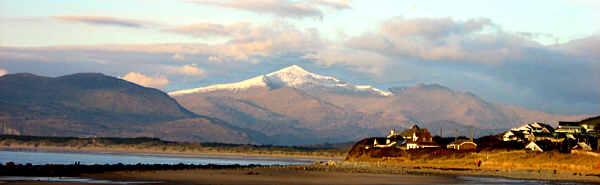
llandanwg5.jpg

A Very Merry Christmas and a Happy New Year to Everyone

Dec 212009

And so another chapter in the strange, fantastic history of global warming has come to an end. As over a hundred heads of state return home from a freezing Copenhagen, the process of trying to work out exactly what, if anything, has been agreed begins. But spokesmen from the UN, the EU, the UK and the US are already busy trying to salvage something anything from the wreckage. They must try to encourage the belief that a document called the Copenhagen Accord was a creditable outcome. There seems little chance that domestic audiences will buy into this myth.

Over 130 of the participating nations were only prepared to ‘note’ the existence of such a piece of paper. Even the vast army of environmental ‘observers’ who were present at the conference are not pretending that there are any words other than ‘disaster’ and ‘failure’ that accurately sum up what has happened. So far as I am aware, there is a vast difference in diplomatic terms between ‘noting’ an accord and signing up to one.

For the weary politicians and their teams of negotiators and advisers, the next task will be to try and explain this fiasco to their own people. In the past, and particularly after the Bali conference two years ago, a vague and inconclusive agreement has been a great advantage in this process. Such a document is a blank canvas on which spin-doctors can exercise their creative skills. This time things are different, and the shortcomings are clear for all to see.

After two weeks of negotiations between over 190 countries it is difficult to detect any real progress towards a low carbon world.  There is no more than a vague aspiration to try to  limit global warming to 2oC. No medium or long-term emissions targets have been set. The all-important question of how the war on global warming will be financed has yet to be   answered or even seriously addressed.

The ‘road map’ hammered out at Bali has lead only into a cul-de-sac. Worse, that fudged agreement, forged to the accompaniment of hysterical sobs from the UN’s Yvo  de Boer, has been revealed for the fudge that it was; a diplomatic assemblage  built on foundations so shaky that now the whole edifice has collapsed. The idea that in the course of the coming year Humpty Dumpty can be put together again and a legally binding global treaty brought into being is fanciful.

This piffling accord, signed by only a handful of countries and scorned with derision by the rest, lays bare the extent of the fiasco for all to see.

Heads of state and climate change ministers will now have to try and justify the doom-laden rhetoric that most of them have pitilessly inflicted on their fellow countrymen during the run-up to the summit. If the diet of climate porn, apocalyptic claims, and outright propaganda promoting the IPCC’s dogmatic prognostications that we have suffered in the UK is anything to go by then this is likely to be an all but impossible task. Only a few weeks ago our prime minister was warning that Copenhagen was the last chance to save the planet and that if it did not succeed then disaster would surely follow, and very soon. As a general election approaches, how will he explain that measures to prevent global catastrophe that were desperately urgent just a month ago can now wait for another year or two? Continue reading »

Dec 192009


As I write this, the word is beginning to seep through from Copenhagen that  a political agreement of some kind has been signed that doesn’t look as though it is worth the paper its written on. It will probably be days before we know what all the  spin really adds up to, but the expressions on the faces of politicians and reporters alike would seem to tell a tale of woe.

In the meantime there is one aspect of what has happened over the last two weeks that is worth bearing in mind, and it should be deeply worrying for sceptics and warmists alike. A brief excursion back into history is useful to put this into perspective.

During the 19th Century, some of what are now called the developed countries exported more than just cheap manufactured goods to what have come to be  known as the developing countries. Tens of thousands of missionaries left our shores and took the Bible to distant lands. In return for faith in the one true God they offered everlasting life, basic schooling, medical care and cast off western clothes. This was enough to persuade the recipients that it was worth giving up their old beliefs and customs, often with disastrous consequences.

Now, at the beginning of the 21st century, a new breed of evangelists has gone forth to the developing nations carrying not the Good Book but the reports of the IPCC.

For the indigenous populations of the countries they visit, espousing this novel faith has similar advantages to espousing the old one. Redemption is offered in return for believing in a new credo, or at least pretending to do so, and with this comes a promise of great bounty. Admittedly the sins that are to be redeemed are not those of the new converts who, in the eyes of the evangelists, are innocent victims of others profligacy. The blame for climate change is laid firmly at the door of the developed countries, who have spewed Co2 into the atmosphere as their economies have grown.  The victims have been too poor, for too long, to take a share in the blame. Furthermore, the faithful now have reason to blame almost any natural disaster that afflicts them on anthropogenic global warming. Continue reading »

Dec 152009


Visitors to  Harmless Sky may like to consider signing this petition at 10 DOwning Stree:

We the undersigned petition the Prime Minister to suspend the Climate Research Unit at the University of East Anglia from preparation of any Government Climate Statistics until the various allegations have been fully investigated by an independent body. More details

To sign go to :

http://petitions.number10.gov.uk/UEACRU/

This has already attracted over 2500 signatures and will be open until the end of February. If you do decide to sign and there is no security risk in doing so please spread the word  and the URL wherever you comment on the net.

It would seem likely that the final total will be a large one and there is an additional benefit. When the petition closes, the government will publish a statement giving reasons for either complying with the petitioners’ requests or for not doing so. That could be interesting.

There can be some delay in names appearing in the  list on the petition website.

It’s now two and a half years since I first asked the BBC for the names of the  ‘best scientific experts’ who attended their Climate Change – the Challenge to Broadcasting seminar at Television Centre in January 2006. In the meantime, readers of this blog may have formed some fairly forthright opinions about how the BBC has responded to that challenge.

This seminar featured in a blockbuster report on impartiality that was published by the BBC Trust in 2007.  This is what it said:

The BBC has held a high-level seminar with some of the best scientific experts, and has come to the view that the weight of evidence no longer justifies equal space being given to the opponents of the consensus.

http://www.bbc.co.uk/bbctrust/assets/files/pdf/review_report_research/impartiality_21century/report.pdf

Since that time, sceptical views on global warming have been all but absent from BBC coverage of the subject. Their reporters and programme makers seem to have adopted a completely uncritical attitude to the deluge of climate propaganda coming from scientists, activists, and politicians with a view to persuading the public of the rightness of their cause. Continue reading »


On the Radio4 Today programme this morning, Simon Cox reported that Dr Rajendra Pachauri, Chairman of the IPCC, says that they will be investigating the CRU emails . See first item at 07:09, here:

http://news.bbc.co.uk/today/hi/today/newsid_8394000/8394501.stm

The BBC website carries the same story but with a rather different slant here:

“We will certainly go into the whole lot and then we will take a position on it,” he said.

“We certainly don’t want to brush anything under the carpet. This is a serious issue and we will look into it in detail.”

http://news.bbc.co.uk/1/hi/sci/tech/8394483.stm

For the first time, Climategate made the  headlines on the BBC’s morning news coverage. Their flagship Today programme, the one that politicians and policy makers can’t afford to miss, ran no less than three items on the story.

In a post here, I suggested that Climategate, like Watergate, is a story that will grow and grow. With the involvement of the IPCC  this seems bound to happen.

Up until now, the action and news coverage has centred on the University of East Anglia’s campus. After all it was Phil Jones’s mailbox at CRU that got raided. But from the very beginning it was clear that the scandal had international dimensions. As I have said before, the address headers on those emails reads like a list of the great and the good in climate research from around the world, and that means that they are the movers and shakers of the  IPCC process too.

In particular Michael Mann, Keith Briffa, and Kevin Trenberth to say nothing of Phil Jones himself have played a major role in the last two IPCC Assessment Reports. All have said apparently compromising things in the leaked correspondence.

  • There is little doubt now that confidence in Mann’s hockey stick, the iconic graph that Sir John Houghton used so successful as a brand image for the IPPC in its Third Assessment Report, was only maintained by collusion with colleagues to suppress criticism.
  • Briffa admits, referring to his IPCC duties, that the needs of the IPCC and science are not always the same.
  • Trenberth questions scientific understanding of the radiation budget, perhaps the most fundamental aspect of the greenhouse hypothesis, and admits that the present cooling cannot be explained. Yet he is a factotum of the organisation that has done more than any other to implant the idea in the minds of politicians, policy makers that the general public that the science is settled and a consensus exists.
  • Jones talks openly of keeping inconvenient scientific research out of the Fourth Assessment Report.

The intervention of the IPCC chairman is a turning point in the development of the CRU affair for two reasons. If the IPCC need to investigate, then it is no longer possible for anyone to pretend that the problem only concerns a few people and a limited amount of research at CRU. Climategate will have gone global. Secondly, any intimation that the IPCC are going to investigate is likely to bring forth a chorus of demands that it is not the place of the IPCC to investigate this matter, but it is the IPCC that should be investigated.

As I have said before, the people whose behaviour has been brought to light by this scandal are not bit players in the world of climate science; they are senior functionaries at the heart of  the IPCC process.

In a report on this morning’s Today programme (here at 08:56), Roger Harrabin had this to say:

Climate change has become the sort of great organising theme, a great grand narrative of our age. And what you’re seeing in Copenhagen now is the sort of businesses who previously rejected ideas that we had to cut emissions now buying into climate change science, and from that position making policies of their own for a transformational economy; a low carbon economy. So you had for instance five hundred businesses last night at Downing Street presenting a petition to Gordon Brown saying give us a strong deal. And I saw Richard Lambert there, Director Genera of the CBI, and said look! what about these stolen emails? Does this put you off?  And this is what he said;

Business people aren’t scientists and they’re not climatologists, but they are paid to understand risk. And they see a risk in climate change and they also see an opportunity. The question is, is it going to be an orderly transition to a low carbon economy or a disorderly transition.  And are investment plans going to be [served ?] by the way that [transition] creates business opportunities in the future. That’s is why business has an real interest, in a successful outcome to the Copenhagen discussions.

http://news.bbc.co.uk/today/hi/today/newsid_8394000/8394501.stm

Why Harrabin should choose to interpret this very cautious response to a question about Climategate  as a refutation of the impact of the CRU debacle is not a subject for this post, but the real burden of what Lambert said certainly is.

Industry has billions invested in what they have been told are the new opportunities that the perceived risk of AGW are supposed to create. Businessmen are, as Lambert rightly says, paid to understand risk. But they are also paid to assess the information on which decisions on risk are based. In the case of global warming the main purveyor of this information is the IPCC, aided and abetted by government and the  quangos it has created.

Businessmen, or the best of them at least, are also paid to know when the information they are relying on can no longer be trusted. In the case of the IPCC, trust is a very important word. As Lambert makes clear, businessmen are not climate scientists and the number of people who can make a critical appraisal of what the IPCC has been telling us are relatively few. The decisions on risk are based almost entirely on what the IPCC has been telling us all for the last decade.

If the new markets that the businessmen are relying on to help ride out the recession begin to collapse because the IPCC process is flawed, then the IPCC can expect no mercy form the business leaders who have become its cheerleaders.

 

Sir Muir Russell chairman of the the UEA review, centre


It has just been announced that Sir Muir Russell will chair the UEA’s  much trailed ‘independent inquiry’ into the CRU scandal, except that the word inquiry is not being used any more. Apparently we are to have an ‘independent review’ instead.

This is surprising because as recently as last night, Professor Acton who is the Vice-Chancellor of the university was indeed talking about an inquiry. Is the change of name because ‘inquiry’ is a rather emotive term suggesting wrongdoing while ‘review’ implies that there is nothing much to worry about? If the latter is the case then the outlook for climate science in general and CRU in particular is very bleak indeed.

Here is the beginning of the press release:

Sir Muir Russell to head the Independent Review into the allegations against the Climatic Research Unit (CRU)

Today the University of East Anglia (UEA) announced that Sir Muir Russell KCB FRSE will head the Independent Review into allegations made against the Climatic Research Unit (CRU).

The Independent Review will investigate the key allegations that arose from a series of hacked e-mails from CRU.

http://www.uea.ac.uk/mac/comm/media/press/2009/dec/homepagenews/CRUreview

It would seem that someone is rather preoccupied with ‘allegations’.

Surely an inquiry review should not be primarily concerned with allegations, but with what has actually happened at CRU. The allegations are only a symptom.

This wording suggests that someone thinks that, if there had been no allegations, then there would be no problems. Given the content of the emails, wouldn’t you expect UEA to recognise that they must find out just what has been going on at the CRU over the last decade?  This possibly Freudian slip would seem to indicate a mind-set at UEA that has yet to appreciate the full implications of this scandal. Continue reading »

This is the first paragraph of a message from David Cameron posted on the Conservative Party website. Apparently it was also emailed to members:

In nine days time, representatives from 192 countries will meet in Copenhagen for the UN Conference on climate change. This summit is of historic importance. It is an opportunity for the world to take bold action to deal with the real danger of climate change.

http://blog.conservatives.com/index.php/2009/11/27/the-copenhagen-summit-is-of-historic-importance/

The rest is fairly predictable, but it is worth reading in full.

When I first looked at this page on Sunday evening there were just over two hundred comments, most presumably from the Conservative faithful otherwise known as their core vote. As I ran my eye over them, I searched in vain for any that might support the leaders take on climate change. I did eventually find a few. Continue reading »

© 2011 Harmless Sky Suffusion theme by Sayontan Sinha